
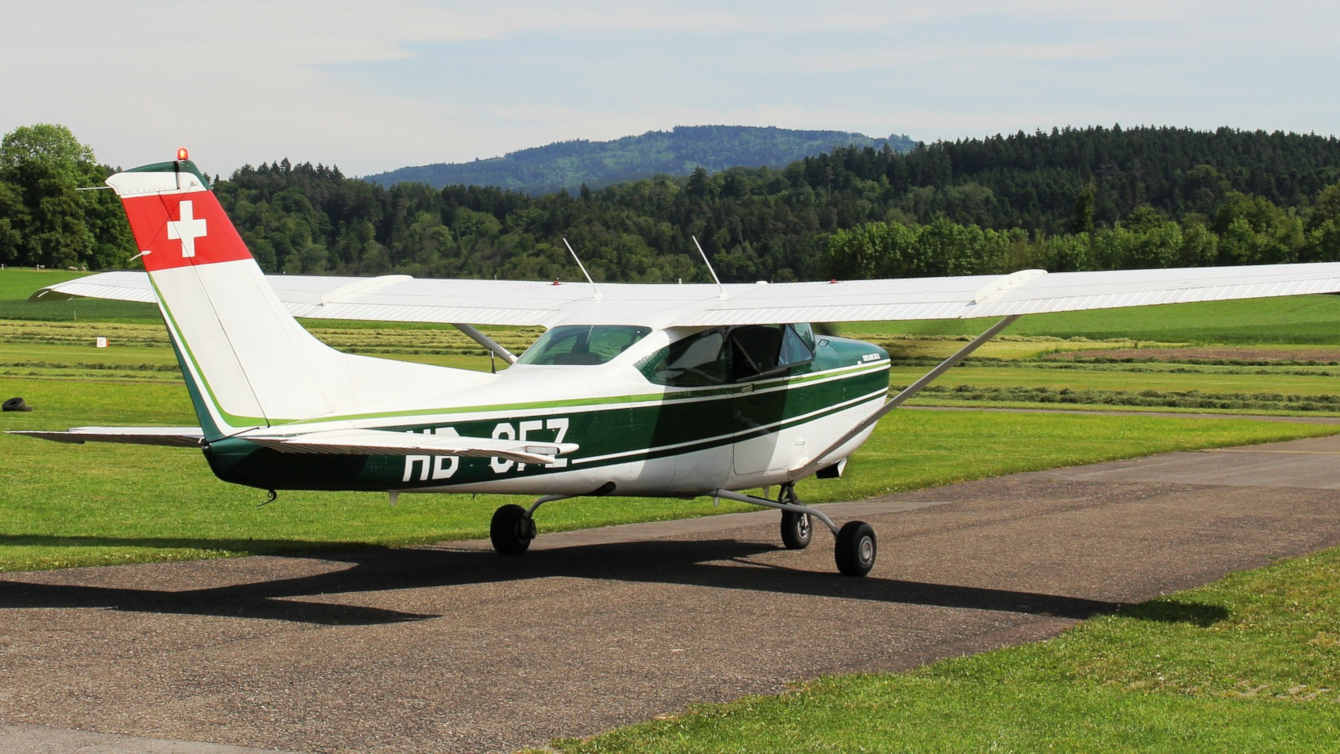
If you, as an insurance professional, ever face the opportunity to deal with aviation insurance, you are far more likely to handle a multitude of general aviation risks before ever seeing the opportunity to quote an airline of any size. General aviation is the term used to define all types of civil aviation that fall outside scheduled or non-scheduled air transportation (types of commercial operations performed by airlines). General aviation includes any type of aircraft and use, whether for private or commercial, so long as it is not ‘scheduled’ or ‘non-scheduled’ air transportation as indicated above. Currently the number of aircraft in the world stands at approximately 300,000 of which 200,000 are in the United States. Of the total number of aircraft, the majority fall under the definition of general aviation. For example, in the United States, roughly three percent of all aircraft are used by air carriers, the rest are general aviation aircraft. Aircraft come with many different features but their overall design is quite similar due to the requirements to achieve controlled flight. Of all the aircraft in the market today, you are likely to come across the Cessna 172 Skyhawk; a four-seat, high wing, single engine aircraft manufactured by the Cessna Aircraft Company. Said aircraft has been the most produced civil aviation aircraft in history.
There are many Cessna 172s in the market today, ranging in value anywhere from under USD 50,000.00 to USD 300,000.00 – depending on the year of manufacture. Although not as expensive as other models, the value of the aircraft is significant enough to bring hardship to an aircraft owner should any damages befall it. The purchase of insurance needs to be considered and coverage should be arranged so that an aircraft owner can recover from any loss to allow his enjoyment of the aircraft to continue.
Hull Coverage
To protect the aircraft and the interests of an insured on the aircraft itself, on a first party basis, hull coverage must be arranged. Hull coverage is used to indemnify the insured for any loss or damage to the aircraft itself. Data such as the type of aircraft, the estimated total hours of operation, the experience of the pilot, etc. are all necessary to analyze the risk and determine an appropriate premium to charge. A Cessna 172 aircraft valued at USD 150,000.00 with a USD 5,000.00 deductible may receive a rate of 1.00% which will be applicable to the aircraft insured value. That means that the total premium charged would be USD 1,500.00 for hull coverage. The premium is calculated by multiplying the rate by the value of the aircraft. The rate is set by the insurance underwriter. Arriving at an appropriate rate is not an exact science. The underwriter will use historical loss data from similar aircraft, market conditions, risk appetite of the insurer and his own intuition to arrive at a rate within certain guidelines set by the insurance company.
Hull War Coverage
The policy wordings for hull coverage generally exclude perils that fall under the definition of “war and allied perils”. In said cases, the policy will exclude losses arising from war, nuclear reaction, strikes, civil commotion, intentional damages by others, etc. The mentioned perils may be written back (i.e. covered) by purchasing Hull War coverage. In our above example, the same Cessna 172 aircraft valued at USD 150,000.00 will have nil deductible and may receive a rate of 0.10% which will apply to the aircraft insured value. The result is an additional premium of USD 150.00 to write back the risks excluded under the hull wording. Risks dealing with nuclear reaction will normally remain excluded.
So far, the aircraft details look as follows:
Aircraft Make & Model: 1985 Cessna 172
Registration Number: Set by aviation authority, ‘N’ number in the U.S.A.
Aircraft Agreed Value: USD 150,000.00
Crew Seats : 1
Passenger Seats: 3

Liability Coverage
Determining the appropriate coverage limits for Hull and Hull War coverage is straightforward, the value of the aircraft is known at the time of underwriting or can be determined by use of market value guides of the stated aircraft make and model or an appraisal inspection done on the insured’s own aircraft. Liability on the other hand is more complicated. Liability insurance tends to fall in the category of ‘you should purchase as much coverage as you can afford’. By owning and operating an aircraft an individual owes a duty of care to third parties to operate the aircraft in a safe manner avoiding any accidents. The risk of an accident occurring will always be present. Aviation, as safe as it is, remains a potentially catastrophic activity. Any accident, no matter how minor or severe, can result in an aircraft owner being held liable for damages far above what he or she may be able to handle. Insurance becomes vitally important to ensure that funds are available to pay claims and that the claims handling process is carried out by professionals with relevant experience.
In the United States, there are no established minimum insurance requirements setting out the amount of liability coverage an aircraft owner must to purchase. However; the financial responsibility law states that an individual (or business) responsible for causing damages must be able to pay for the damages caused. The financial responsibility law basically sets unlimited liability on the part of the aircraft owner causing the accident up to the amount of damages caused. Other markets, such as the European Union, have established minimum insurance requirements which set a base for the minimum amounts of insurance coverage individuals must purchase to operate an aircraft. Nevertheless; if damages are greater than the coverage limits purchased, the insured will remain responsible for indemnifying all injured parties fully even after the policy’s coverage limits have been depleted.
In insuring the above referenced Cessna 172 aircraft in the United States an insured may purchase a USD 2,000,000.00 combined single limit liability policy. The insured may purchase greater or lower limits. There is no set minimum. When a combined single limit of USD 2,000,000.00 is purchased, the policy will pay out up to USD 2,000,000.00 for all damages that the insured is held legally liable to pay for third party legal liability and passenger legal liability combined. If the limit runs out, the insured will no longer have the backing of the insurer and will no longer be indemnified for any losses above the USD 2,000,000.00 limit. Split limits are also possible and they may read USD 1,500,000.00 for third party legal liability and USD 500,000.00 for passenger legal liability. For liability coverage, a specific premium amount is quoted. For the above example, a premium of USD 1,000.00 may be charged. If the coverage limits are split, then the same premium of USD 1,000.00 may be stated as follows: USD 600.00 plus USD 100.00 per passenger seat (four i.e. one crew and three passengers – if the pilot/crew fall under the definition of passengers in the policy wording). In practice, split limits are likely to result in lower premiums.
In Europe, and other jurisdictions where minimum coverage requirements are defined, the third-party liability limit is set according to the maximum takeoff weight of the aircraft and the per passenger legal liability limit is set by statute. The maximum takeoff weight of a Cessna 172 aircraft is 1,111 kg. At the maximum takeoff weight of a Cessna 172, the coverage requirement is SDR 3,000,000.00 which roughly equates to USD 4,500,000.00. The coverage requirement for passenger legal liability is SDR 250,000.00 per passenger seat which roughly equates to USD 350,000.00 per seat. The coverage limit that should be purchased to comply with the minimum insurance requirements in Europe is approximately USD 6,000,000.00 for a combined single limit or USD 4,500,000.00 for third party legal liability and USD 1,050,000.00 for passenger legal liability excluding the pilot (USD 1,400,000.00 including the pilot under the passenger definition). Premium for said coverage limits may approach USD 2,500.00.
Pilot Personal Accident Coverage
For pilots, several scenarios must be considered. First, if the pilot is the aircraft owner, then liability coverage will not be appropriate because the insured cannot sue himself. Liability coverage is meant to indemnify the insured for damages caused by the insured to third parties. If the pilot is an employee of the insured, then workers compensation coverage will be more appropriate since the aircraft insurance policy will contain exclusions removing coverage for liability assumed under workers compensation regulations.
In the above referenced situations, a personal accident policy may be purchased to cover the pilots of the aircraft (and/or the passengers as well). The difference between a liability policy and a personal accident policy is that liability policies provide indemnity to the insured, meaning that the policy intends to restore the insured to his/her previous condition without providing any benefit to the insured other than the recovery of the lost amount. A personal accident policy is a benefits policy in which the coverage limit of the policy becomes payable in full by insurers should the injury suffered fall within the pre-established criteria of the policy, partial payments may also be payable for lesser injuries as defined in the schedule of benefits. The payment is made to the injured party which may well be the insured. The personal accident policy is not concerned with the actual amount of loss. The policy is concerned with the type and extent of the injury suffered, if said injury qualifies for a payout and if so, the payout amount (as set out in the policy).
There is no set standard to deal with coverage for the pilots. When purchasing personal accident coverage, the insured may purchase the coverage limit they deem appropriate. In our example, we shall use a limit of USD 150,000.00 for the pilot. Said limit will cover solely the pilot whilst he is flying, boarding, alighting the aircraft or whilst airside. A rate will be set according to the level of exposure to loss presented by the risk. We shall use a rate of 0.35% of the personal accident coverage limit. Our personal accident premium therefore reads USD 525.00 for a single pilot seat.
To determine the total premium for insuring the above referenced Cessna 172 aircraft one must add all the premium for the individual coverages purchased. Since we used two examples, one insuring the aircraft in the United States where no minimum coverage limits are required and the other in the European Union which does set minimum coverage limits, we have two different totals.

Coverage Limits, deductibles and premium for a Cessna 172 aircraft insured in the United States:
Hull:
Agreed Value: USD 150,000.00 each aircraft.
Deductible: USD 5,000.00 applicable to all losses excluding any form of total loss.
Rate: 1.00% of aircraft agreed value, each aircraft.
Premium: USD 1,500.00
Hull War:
Agreed Value: USD 150,000.00 each aircraft.
Deductible: Nil.
Rate: 0.10% of aircraft agreed value, each aircraft.
Premium: USD 150.00
Liability:
Combined Single Limit: USD 2,000,000.00 any one person/aircraft/accident.
Premium: USD 1,000.00 each aircraft.
Personal Accidents:
Crew Personal Accident Limit: USD 150,000.00 each insured seat.
Crew Personal Accident Rate: 0.35% of personal accident limit each insured seat.
Premium: USD 525.00
Total premium: USD 3,175.00
Coverage Limits, deductibles and premium for a Cessna 172 aircraft insured in the European Union:
Hull:
Agreed Value: USD 150,000.00 each aircraft.
Deductible: USD 5,000.00 applicable to all losses excluding any form of total loss.
Rate: 1.00% of aircraft agreed value, each aircraft.
Premium: USD 1,500.00
Hull War:
Agreed Value: USD 150,000.00 each aircraft.
Deductible: Nil.
Rate: 0.10% of aircraft agreed value, each aircraft.
Premium: USD 150.00
Liability:
Combined Single Limit: USD 6,000,000.00 any one person/aircraft/accident.
Premium: USD 2,500.00 each aircraft.
Personal Accidents:
Crew Personal Accident Limit: USD 150,000.00 each insured seat.
Crew Personal Accident Rate: 0.35% of personal accident limit each insured seat.
Premium: USD 525.00
Total premium: USD 4,675.00
As can be seen above, the main difference lies in the liability coverage limits that must be purchased. The absence of minimum coverage requirements does not mean that the insured’s responsibility will be any less should they cause an accident, it only means that the aircraft does not have pre-established coverage limits to comply with. The aircraft may be operating without insurance.
Aviation and the use of aircraft has become a vital part of our livelihood, it has made the world a smaller place. Aircraft such as the Cessna 172 have made flight accessible to thousands of individuals. Aviation is very safe and it’s an activity that has captivated us and become entrenched in our society since the first powered flights performed by the Wright brothers in the year 1903. Although very safe, aviation is extremely unforgiving of pilot error. The potential for accidents (and the losses that arise therefrom) should be carefully considered. Insurance is available to transfer the risks of aviation exposures to insurers thus allowing some relief to an insured for his enjoyment of his aircraft which may well be a Cessna 172 or other model.
Please continue to read our blog to see further discussions on the topic of aviation insurance and more. The above is an introduction outlining some key points for insuring aircraft such as the Cessna 172. Future posts shall expand on the available coverages and what is required to successfully work in the field of aviation insurance and more.
Get Aviation Insurance Coverage
Let us help with your aviation insurance negotiations.
Use our services to obtain competitive coverage.